Day by day
~10:00 PM
Leave for Taoyuan
Out the door around ten for the midnight departure. That's roughly a 2-hour cushion at the airport — right for a long-haul with bags. Everything you want in the first 24 hours goes in the carry-on: the Athens arrival lands mid-morning and the room may not be ready.
Just after midnight
TPE → Athens
Departing in the small hours of the 20th. Athens runs 5 hours behind Taipei in summer, so a midnight departure and a long one-stop routing puts you on the ground in Greece around the middle of the same day. Sleep on the first leg if you can — day one is a soft day, but day two starts at eight in the morning.
Book · confirm the exact routing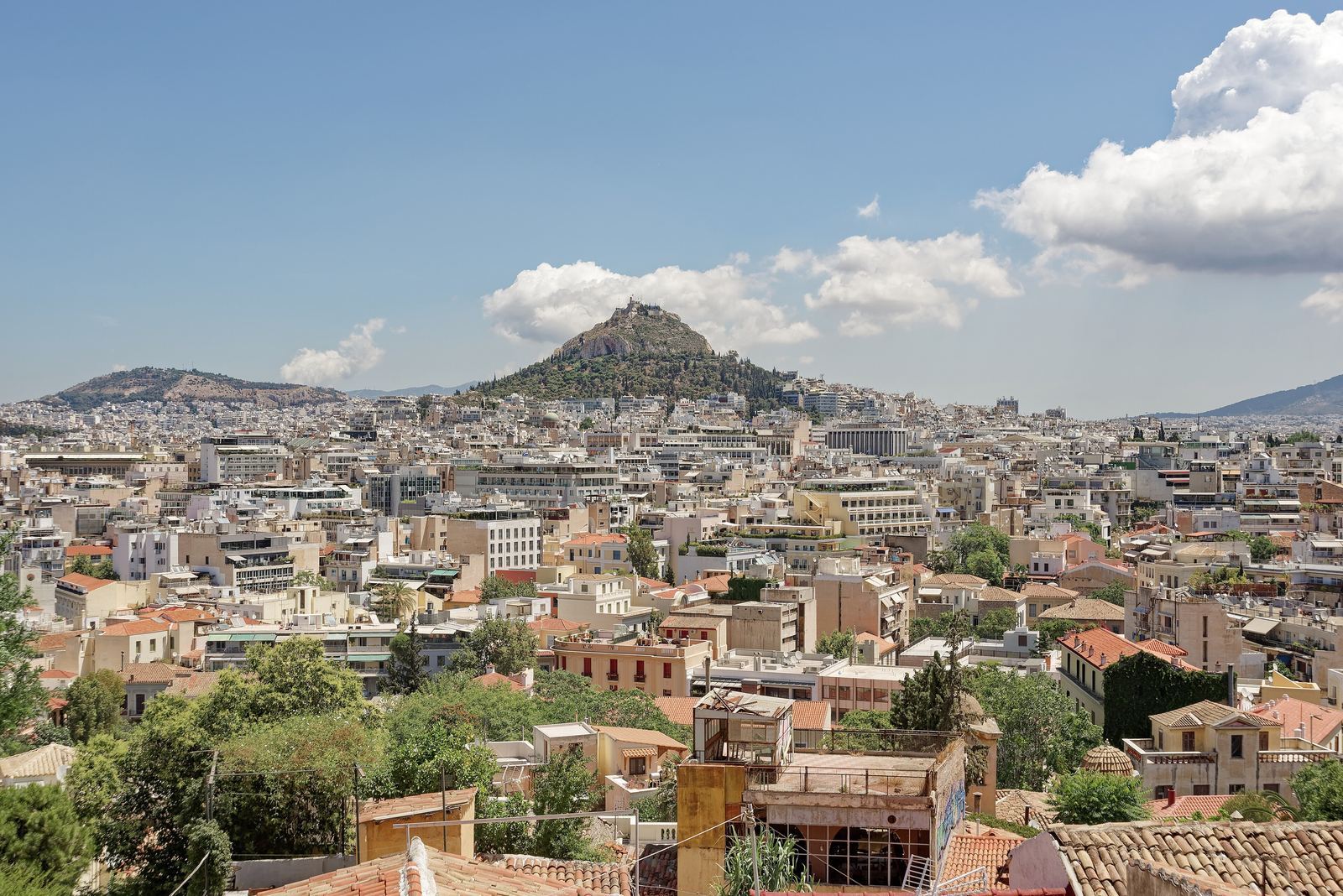
On landing
Airport → Kolonaki
Two clean options. Taxi is a regulated flat fare into the central ring — €40 between 05:00 and midnight, €55 overnight, tolls and luggage included, so there's nothing to haggle over. Metro Line 3 runs airport → Syntagma in about 40 minutes for €9–10 a head, then it's a short hop up to Kolonaki — but it only starts at 06:30, so if you land earlier the taxi decides itself.
Afternoon
Check in & reset
The Modernist sits in Kolonaki — the smart neighbourhood at the foot of Lycabettus, in what used to be the Canadian embassy. Thirty-eight rooms, black marble and brass, a private gallery downstairs. Shower, change into something lighter than you flew in, and don't try to see a single ruin today.
~7:30 PM
First drink on the roof
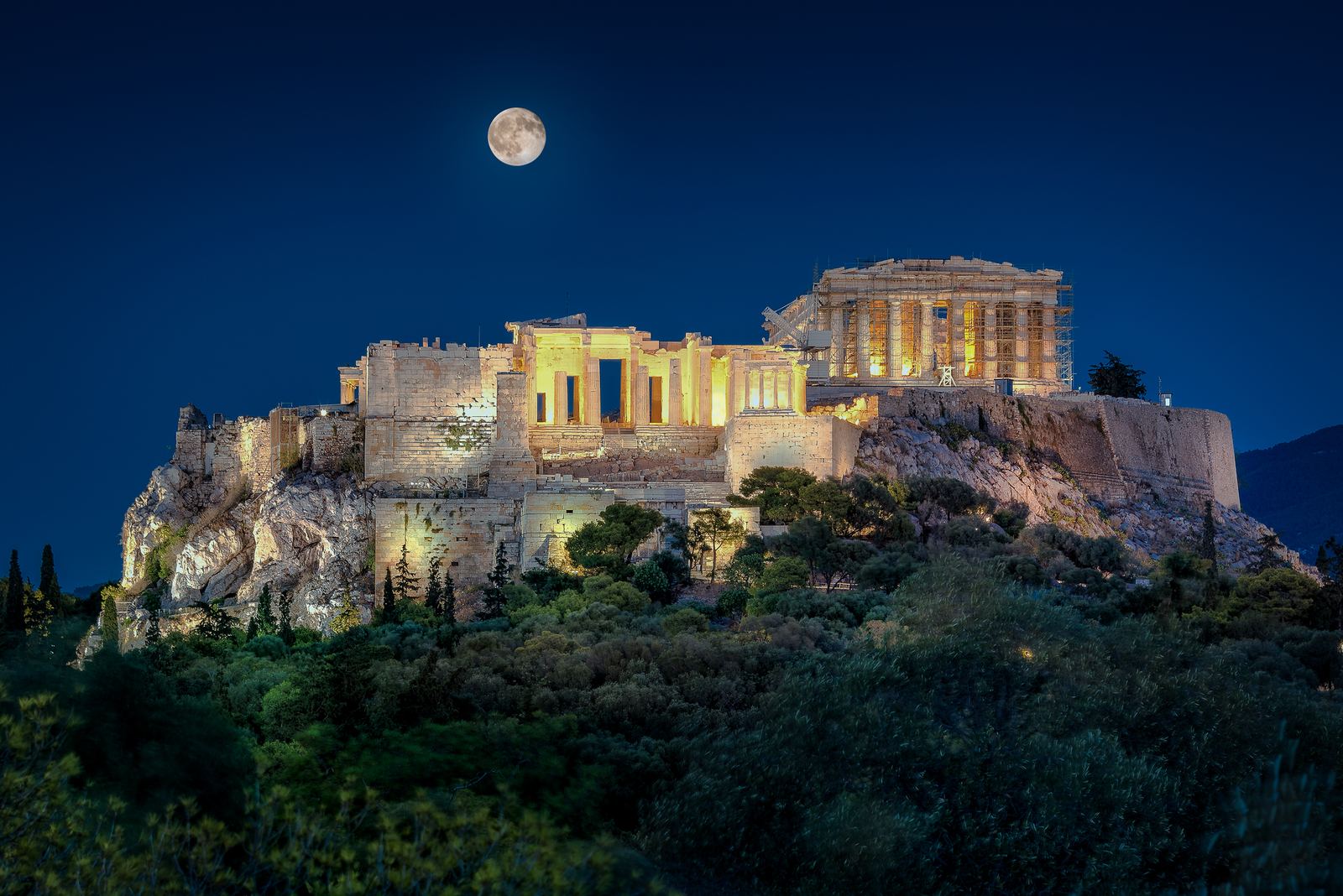
The hotel's rooftop bar, 1818, looks straight across the city at the Acropolis. Be up there before sunset at 20:14 — the rock turns amber, then the floodlights come on and it does the whole thing again in gold. Cheapest spectacular view in Athens if you're already sleeping underneath it.
~9:00 PM
Dinner in Kolonaki
Greeks eat late and August is when the city stays out. Kolonaki's side streets around Skoufa and Tsakalof are five minutes on foot and full of tavernas and wine bars. Keep it easy and close — you're jet-lagged and tomorrow starts at eight.
Walk-in · no booking needed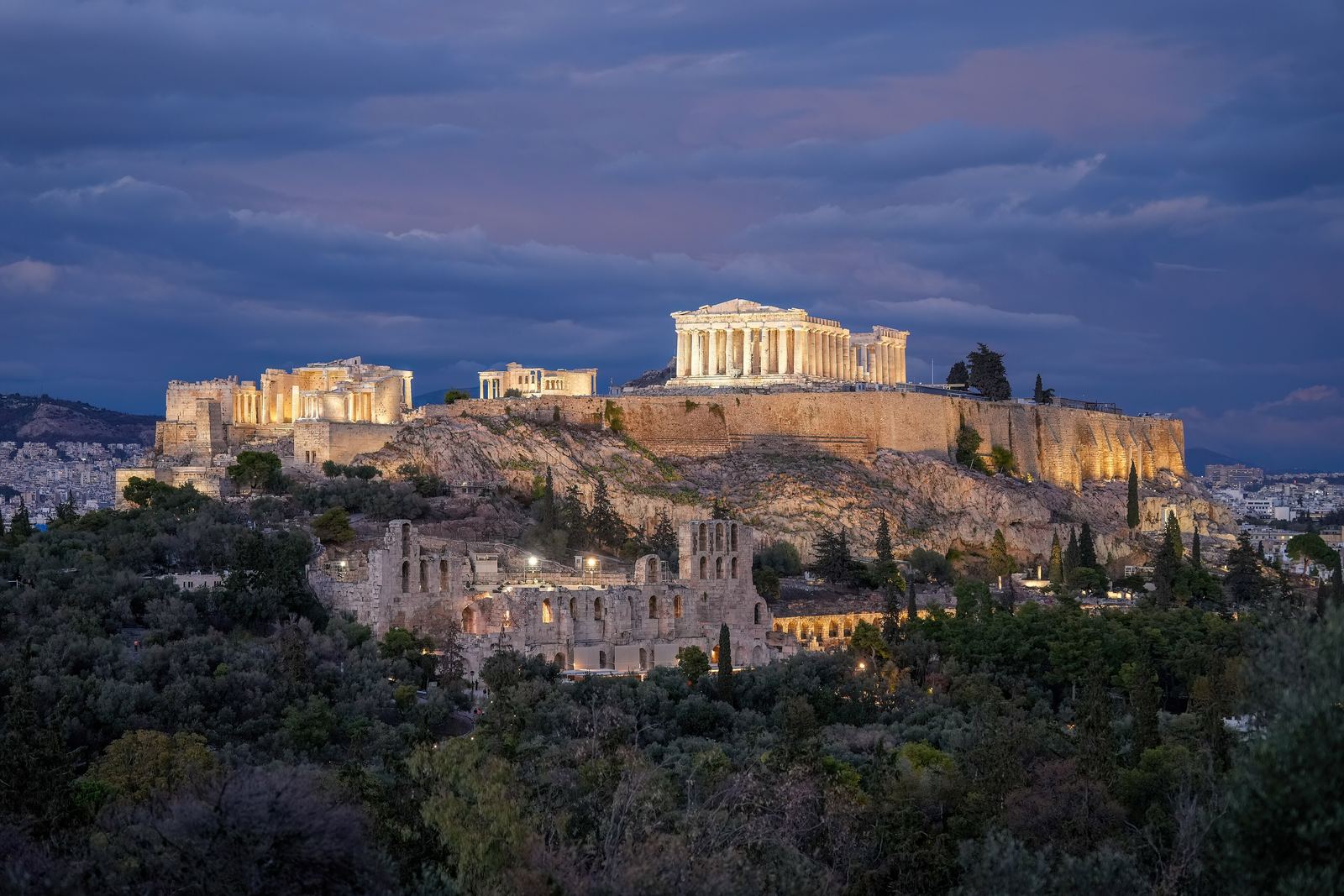
8:00 AM — be at the gate
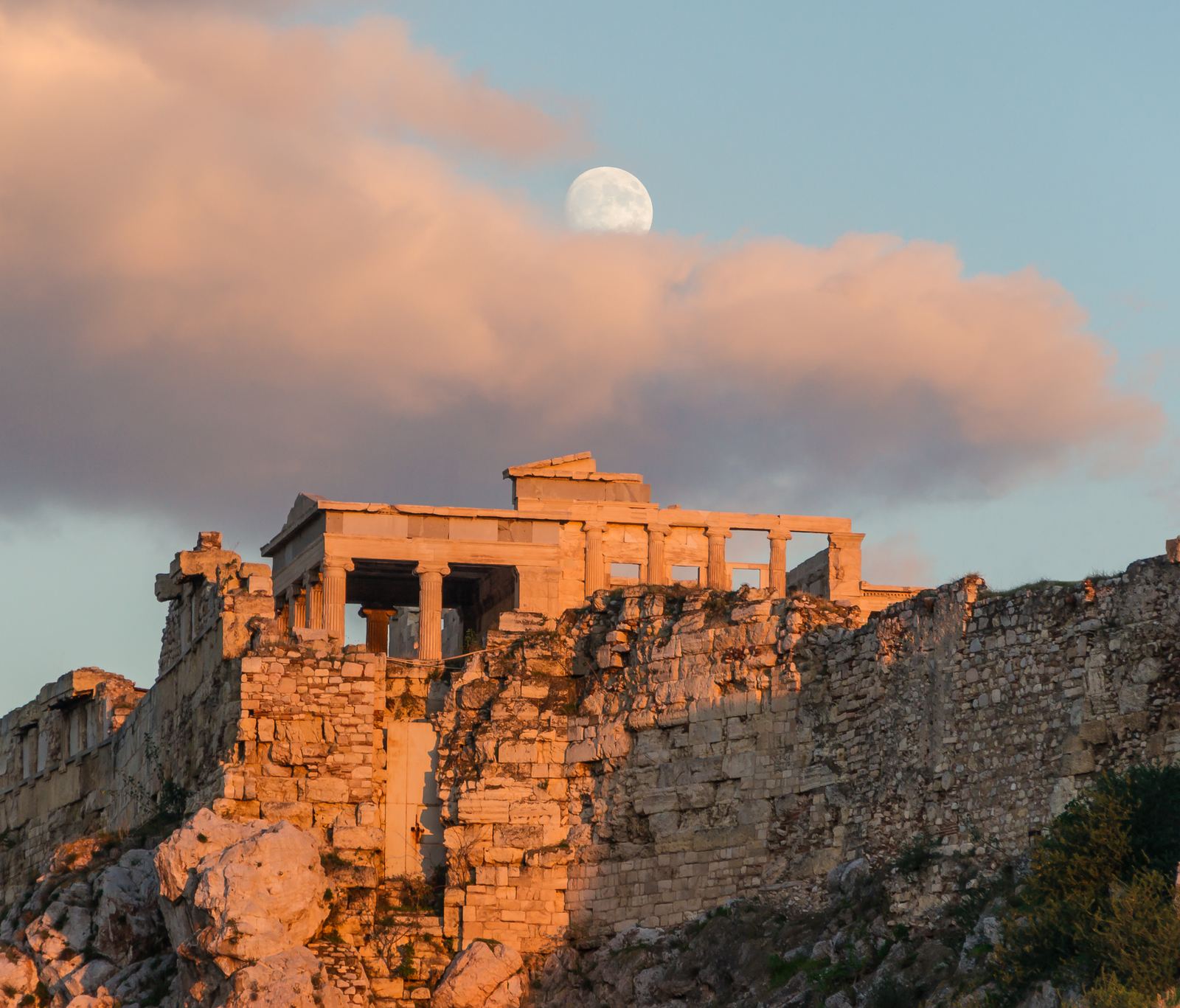
The Acropolis, at opening
This is the one thing on the whole trip worth setting an alarm for. Gates open at 08:00 and the site is 5–10°C cooler than it will be at noon, with a fraction of the people — by 10am the tour groups have landed. Tickets are timed, capped and must be booked ahead at hhticket.gr: you pick a one-hour slot and may enter from 15 minutes before to 15 minutes after it — miss the window and the ticket is dead. The 08:00–09:00 hour is the largest slot of the day and the first to go. There is no shade up there: hat, water, and shoes with grip, because the marble is polished glassy by two thousand years of feet.
Book the 08:00 slot NOW — not the night before Propylaea · Parthenon · Erechtheion~10:00 AM — on the way down
The Areopagus — Mars Hill
You walk straight past it. The bare grey outcrop just below the Acropolis entrance is the Areopagus — the hill where Paul was brought before the Athenian council and made the speech in Acts 17:22–34, the "unknown god" one. It is the single most famous meeting of the early church and Greek philosophy, and it happened on this rock, in sight of the temples he'd just walked through. A bronze plaque at the foot of the steps carries the whole address in Greek.
Free, unticketed and never closed — which is the other reason to do it here rather than make a separate trip. Two minutes' detour from the gate you're already standing at.
The rock is genuinely slippery. The ancient steps are worn to glass and there are no railings on top; take the modern metal staircase beside them, wear the shoes with grip, and go carefully coming down.
Free · no ticket · 4 min from the Acropolis gate~10:30 AM
Acropolis Museum
Down the hill and air-conditioned — which by late morning matters. The top floor is built to the exact footprint and compass bearing of the Parthenon, so the frieze is laid out as it stood, with the real thing framed through the glass behind it. Do it in this order and the ruins you just walked through suddenly make sense.
~1:00 PM
Lunch in Plaka, then hide from the sun
Plaka's lanes run up the north slope into Anafiotika — a pocket of whitewashed Cycladic cottages built by island masons who came to build the king's palace and made themselves a piece of home. It's Santorini in miniature, two days early. Then take the Greek option and go horizontal for a couple of hours: midday in August is for lying down.
~5:30 PM
Ancient Agora & Monastiraki
Late afternoon light, long shadows, and the Temple of Hephaestus — the best-preserved Doric temple anywhere, and far quieter than the rock above it. This is where Socrates actually argued with people — and, four centuries later, where Paul did the same: Acts 17:17 has him in this marketplace “every day with those who happened to be there,” which is the argument that got him hauled up the Areopagus in the first place. The Stoa Poikile along the north edge is where the Stoics got their name, and Luke names both Stoics and Epicureans as the men who took him. Spill out into Monastiraki afterwards for the flea market and the noise.
7:30 PM
Lycabettus for sunset
Your hotel is at the foot of it, so this is a home fixture. The funicular climbs to the chapel on the summit — the highest point in Athens, with the Acropolis below you and the Saronic Gulf glittering behind it. Sunset is 20:13; be up by 19:40. Walk down through Kolonaki to dinner.
Read this first
This day is overpacked — cut it in half
As written below this is a museum, a lake, a two-and-a-half-hour round trip to a headland and a late night out, in around 35°C. That is not a day, it's a forced march. Sounion at sunset is the keeper — it's the one thing here you can't do another day. So pick one of the two daytime options and let the other go:
A · Museum morning — the National Archaeological Museum, air-conditioned, then straight back for a siesta before driving out.
B · Water day — skip the museum entirely, go to Lake Vouliagmeni or the coast in the morning, stay wet until mid-afternoon, then continue down the coast to Sounion from there. B is the cooler day and the shorter drive, since Vouliagmeni is already halfway to the cape.
C · Corinth instead. If the biblical sites are the point of this trip, today is the only day they fit — but it replaces the whole day, not the morning. Corinth is 80 km west, Sounion 70 km southeast; you get one or the other. Paul lived in Corinth for eighteen months and stood trial there, and the platform he stood on is still in the forum. Full detail in Walking Acts 17, below the itinerary.
Psyrri afterwards is optional — it's a 2-hour round trip back into town~9:30 AM
One museum, then out of the heat
The National Archaeological Museum is the heavyweight — the Mask of Agamemnon, the bronze Artemision Zeus mid-throw, the Antikythera mechanism that turned out to be a 2,000-year-old analogue computer. If nobody wants a second museum day, swap it for the Panathenaic Stadium, all-marble and empty enough to run on.
Midday onward
Get in the water
Athens has a coastline and August is the reason to use it. The tram or a 25-minute taxi puts you on the Athens Riviera at Glyfada or Vouliagmeni. Best of the lot is Lake Vouliagmeni — a spring-fed thermal lake in a collapsed cave, water at a steady 24°C year round, cliffs going straight up behind you.
~6:00 PM
Cape Sounion for the sunset
The big swing of the day, and worth it. An hour and a quarter down the coast road, the Temple of Poseidon stands on a headland with sea on three sides — white marble going pink as the sun drops into the Aegean. Byron carved his name into a column here in 1810 and you can still find it. Aim to arrive around 19:15 for a 20:12 sunset; last entry is typically ~30 min before closing, so check the day's hours before committing.
Taxi, rental or tour · check closing time~9:30 PM
Saturday night in Psyrri
Back in town, Psyrri is where Athens actually goes out — a dense knot of tavernas, rooftops and bars behind Monastiraki that doesn't really get going until ten. Last night in the city; the island is a slower gear.
10:05 → 10:55
Athens → Santorini
Fifty minutes in the air, and it buys you the entire afternoon on the island — which matters when you only have two nights. The ferry alternative was never really one: the high-speed from Piraeus is 5 to 5½ hours, the slow boat closer to eight, and in late August the meltemi chops the Aegean up in the afternoons badly enough to cancel sailings outright.
Work backwards from 10:05. It's a domestic departure, so an hour and a quarter at the airport is plenty — be at ATH by about 08:45. The hotel is in Kolonaki and the airport is a €40 flat-rate taxi, 30–45 minutes, so order it for around 07:50 and check out before it arrives. The metro is cheaper but it's a change at Syntagma with bags, on a Sunday morning timetable.
Sunday · domestic terminal · bags off by ~11:15~11:15
Airport → Oia
Santorini's airport is on the flat east side; Oia is the far north tip, about 25–30 minutes away — so you should be at the hotel around midday, with the whole afternoon and the sunset still ahead of you. Arrange the transfer with the hotel in advance — the taxi rank at JTR is famously tiny for the number of people it serves. Note that much of Oia is pedestrian-only stone lanes and steps, so you may be handing bags over for the last stretch.
7:00 PM — go early
The Oia sunset
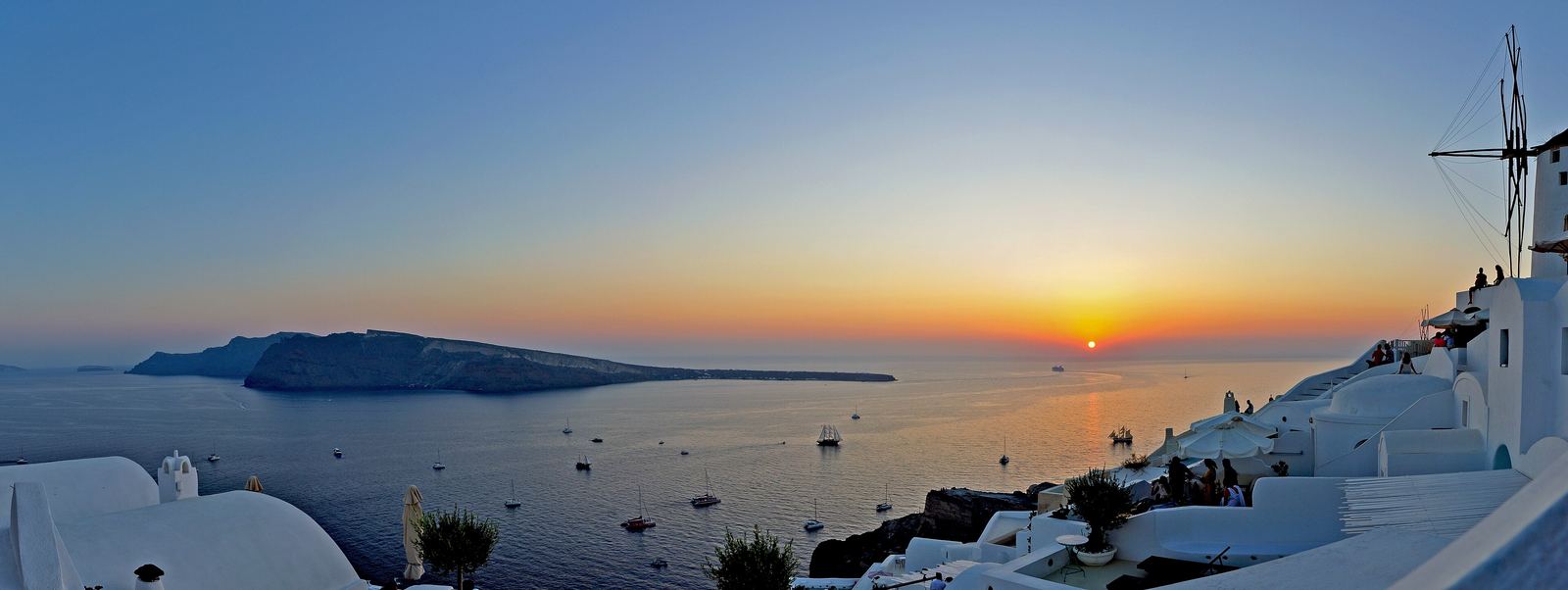
The single most crowded sunset in Greece, and still worth it. The whole island funnels toward the Byzantine castle ruins at the northwest tip; people are in position an hour ahead and it ends in applause. Sunset is 20:02 — be there by 19:00 for a spot on the wall. The civilised alternative: skip the scrum entirely and book a caldera-facing terrace table for 19:30, and watch it with a drink and a chair.
Book a caldera-view table if you'd rather sit~9:00 PM
Dinner in Oia
Once the sun's gone the crowd drains away in twenty minutes and Oia gets its lanes back — the blue hour here is quietly better than the sunset. Grilled octopus, fava, tomato keftedes, and a cold bottle of Assyrtiko, the island's flint-dry white grown in ground-level basket vines that shelter the fruit from the wind.
7:00 AM
The photo, before anyone's awake
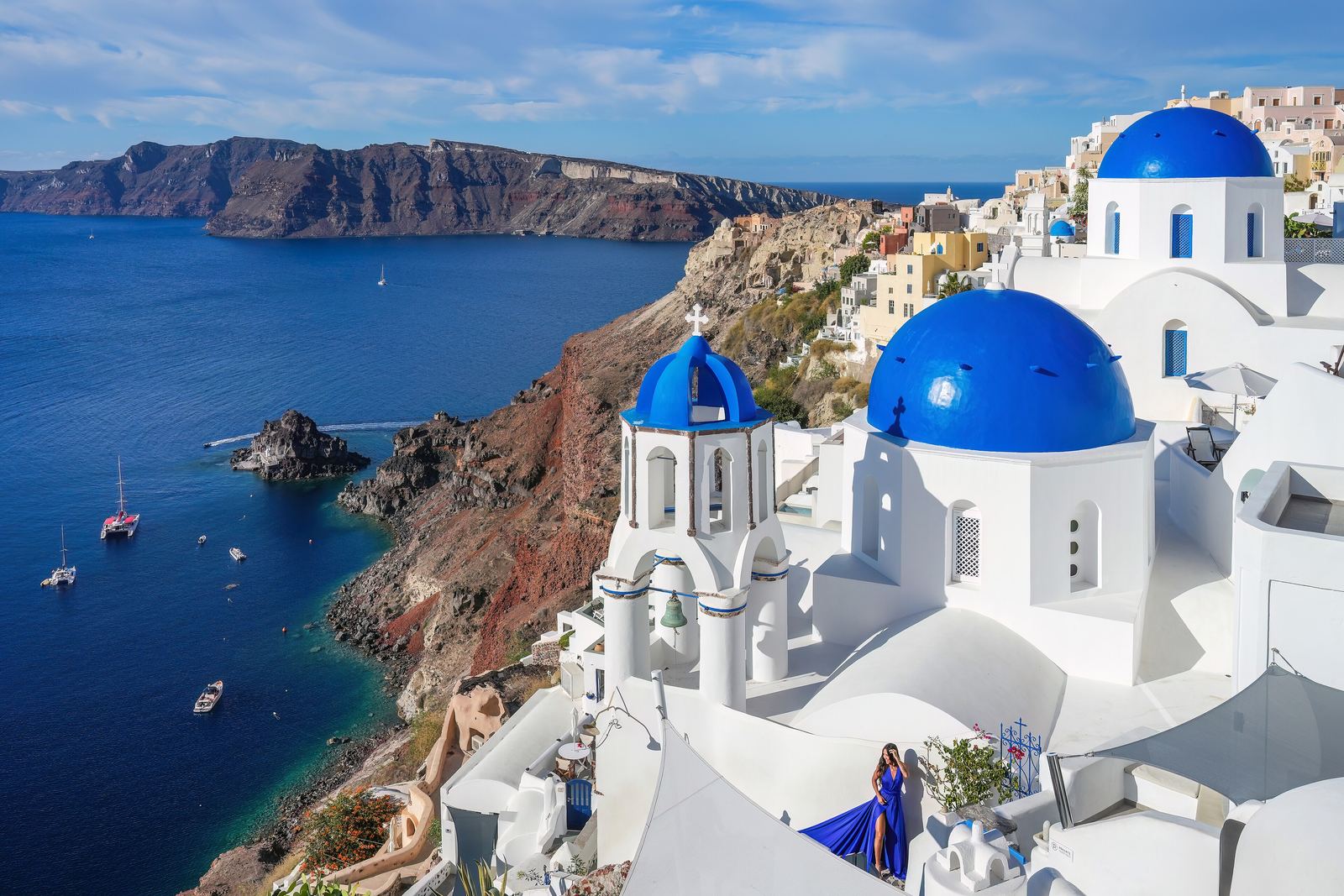
This is why you're staying in the north. The three blue domes — the shot on every poster of Greece — are on the marble path at the northwest end of Oia, looking down the cliff with the caldera behind. At seven in the morning you will have it to yourself and the light comes from behind you; by eleven there is a queue and the sun is flat and white. Get up. It's a two-day island and this is the reason people come.
Golden hour · northwest marble path~11:00 AM
Catamaran around the caldera
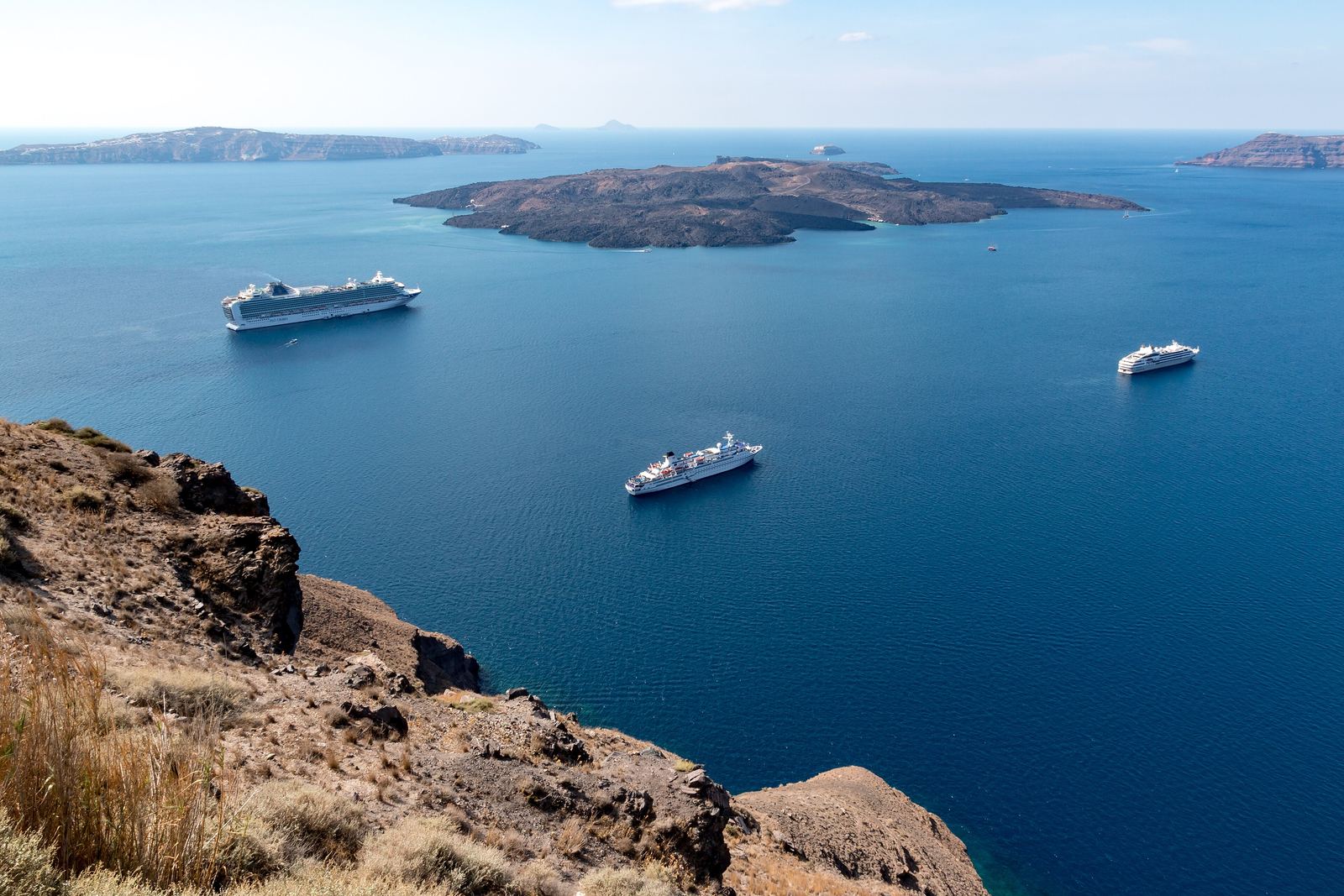
The best half-day on the island. A catamaran out of Ammoudi or Vlychada does the loop — anchoring off the hot springs at the volcano, the Red Beach and White Beach under their cliffs, swimming straight off the boat, lunch cooked on board. Seeing the caldera from the water, with 300 m of cliff and the villages iced along the rim, is a different thing entirely from looking down at it.
Book ahead — these sell out in AugustAlternative
Ammoudi Bay & the 300 steps
If a boat day is too much: walk the 300 steps down from Oia to Ammoudi, a red-cliff fishing cove with tavernas right on the water. Swim off the flat rocks past Saint Nicholas chapel, eat the catch at a table where the sea is a metre from your feet. Take a taxi or a donkey back up — the climb in afternoon heat is genuinely hard.
~6:30 PM
Assyrtiko above the caldera
Optional — only if the catamaran gets back in time. Santorini's vines are grown in kouloura — coiled into low basket nests on volcanic ash so the wind can't shred them and the dew collects inside. The wine is bone-dry, saline and unlike anything else. Half a dozen wineries on the caldera rim do tastings with the view; go for the second-last slot and let it run into sunset at 20:00. The wineries are on the rim road, not in Oia, so this only works with a taxi booked in advance — boat back, shower, drive out, is a tight sequence after a full day at sea. Drop it without regret.
Needs a pre-booked transfer — don't wing it after the boatBefore bed
Tomorrow starts before six
The flight off the island is 08:30 and the bag drop shuts at 07:30, so you're leaving Oia around 06:15. Three things tonight and the morning takes care of itself: pack and settle the bill before you sleep, book the airport transfer for 06:15 (Oia is pedestrian lanes, so agree exactly where the car meets you and how far you're carrying bags), and check in online for both flights — they're separate tickets, so that's two check-ins, not one.
Transfer at 06:15 · two separate online check-ins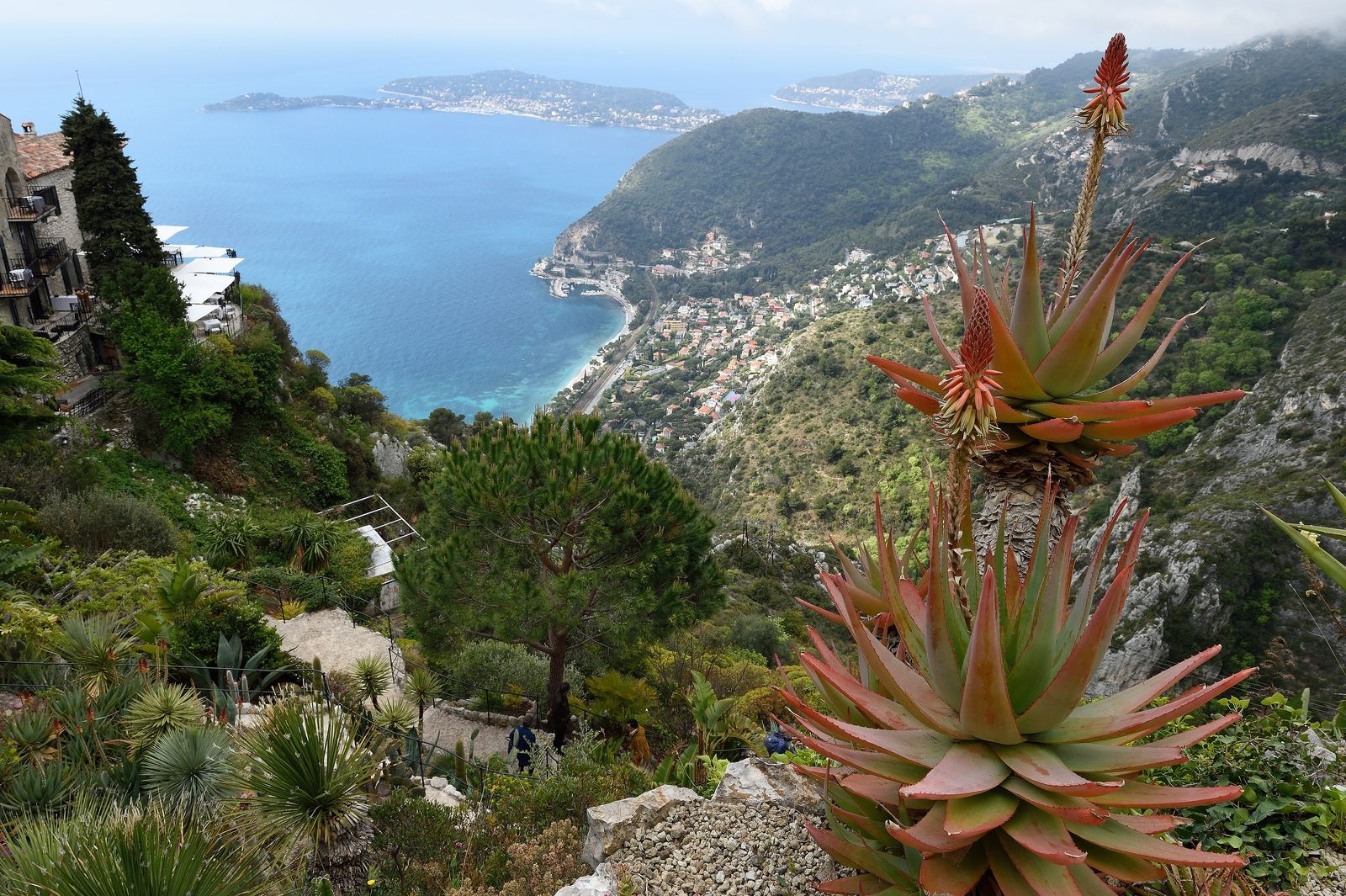
06:15 — the earliest start of the trip
Off the island: A3353, 08:30 → 09:15
The 25th is a Tuesday and the only Santorini–Nice non-stop runs Wednesdays and Sundays, so the day is two hops with Athens in the middle. The first is Aegean A3353, 08:30 → 09:15 — forty-five minutes, and the reason you're up before six.
The clock that matters is not the departure — it's the bag drop. Aegean closes domestic checked baggage 60 minutes out, so 07:30. Everything else follows from that one deadline. You want enough cushion to absorb the desk queue, then a single small security checkpoint, then the gate — Aegean asks you there 30 minutes before, i.e. 08:00.
Working it back: at JTR by 06:45 gives you three quarters of an hour of queue before the 07:30 cutoff, which is real cover at an airport this undersized in August, and still leaves a comfortable run through security. With the 25–30 minute drive from Oia, that's the car at 06:15. Arriving at 07:00 is not reckless, but it leaves only half an hour against the cutoff — and JTR is exactly the airport where you don't want to find out.
The deadline only binds if you're checking bags. Check in online the night before and travel with cabin bags only, and 07:30 stops applying to you entirely — you'd just need security and the gate by 08:00, and 07:10 would be plenty. Two weeks of luggage makes that unlikely, but it's worth knowing which clock you're actually running against.
Bag drop shuts 07:30 · at JTR by 06:45 · gate by 08:0009:15 → 13:35 · four hours and twenty minutes
The Athens layover — separate tickets, but a big cushion
This was the one genuinely risky junction on the trip, and the times have defused it. The two legs are on separate tickets, which means the connection is not protected: if A3353 were badly delayed, missing the Nice flight would be your problem and your expense, not the airline's. What makes that survivable is the gap — 4 hours 20 minutes. The first flight would have to lose almost four hours before you were in trouble.
What separate tickets actually cost you is convenience, not safety here. Bags cannot be checked through, so you collect them at Athens arrivals, walk round to departures, and check in again for Nice. Aegean's desks typically open two to three hours before departure, so expect to be sitting with your luggage until around 11:00. If you'd rather not, Care4Bag on the arrivals level near Exit 1 takes bags from about €6 and is open around the clock.
Don't try to go into the city. Forty minutes each way on the metro, plus a bag re-check at the far end of it, turns a comfortable margin into an anxious one for very little. The better use of the time is inside the terminal: the archaeological exhibition on the Departures level at Entrance 3 is free and holds 172 finds dug up when the airport itself was built — Neolithic through post-Byzantine, out of the ground you're standing on. It is a genuinely good small museum, and after three days of Athens it lands better than it has any right to.
Not protected — but 4h20 of slack · re-check bags at Athens Free archaeology exhibit · Departures, Entrance 3~15:30, on landing at NCE
Pick up the car
The rental desks are at Nice Côte d'Azur, right on the coast at the end of the Promenade. Two things before you drive off: photograph the car from all four corners plus the roof and wheels, and check whether they've given you a toll transponder for the A8. Then note that you have just acquired a car in one of the most parking-hostile stretches of Europe — which is the whole reason the ferry and the corniche matter later.
Full-to-full fuel · photograph everything~1 hour
Take the corniche, not the motorway
It's barely 30 km to Cap d'Ail. The A8 does it in half an hour and you'll see a tunnel. The Moyenne Corniche takes about fifty minutes and is one of the great drives on earth — carved into the cliff a few hundred metres above the sea, past Èze perched on its rock, the Med filling the whole windscreen. Grace Kelly drove this road in To Catch a Thief. You have the time. Take the corniche.
~17:00 — check in first
The hotel is in France, not Monaco
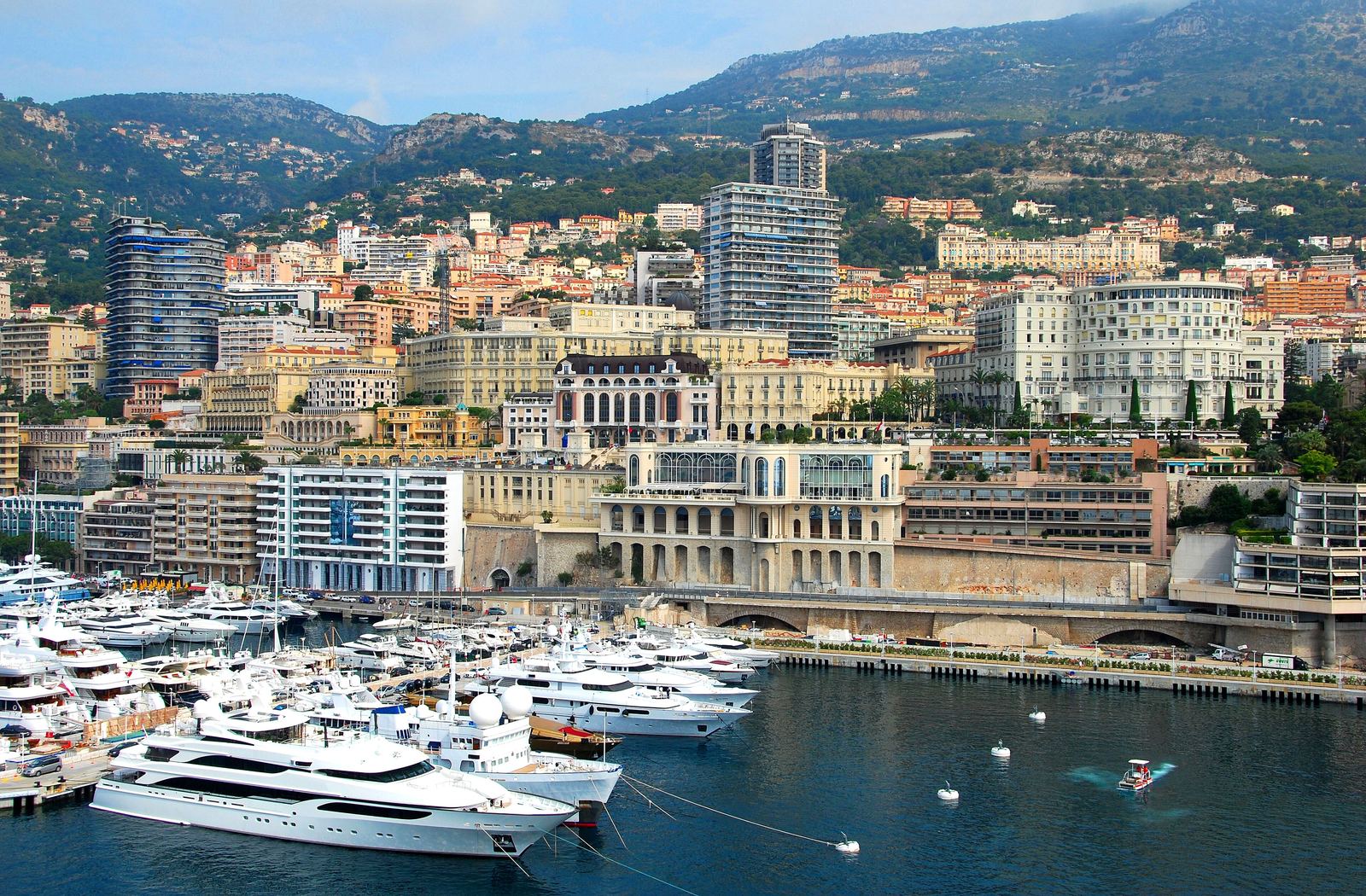
Worth knowing before you set the sat-nav: the Riviera Marriott La Porte de Monaco is on the Port de Cap d'Ail, which is in France — about a hundred metres short of the border, on its own marina. That is a good thing on balance. You arrive before the principality rather than having to get into it, you're on a working port rather than a canyon of towers, and parking is the hotel's problem rather than yours.
It also changes what's walkable. The Rock — the Palace, the Oceanographic Museum, the old town — is about 12 minutes on foot, which is closer than most hotels actually in Monaco. Casino Square is around 30 minutes uphill, or a few minutes by car or the hotel's shuttle. Confirm the shuttle and the parking rate at check-in; both are advertised but neither is worth assuming.
Port de Cap d'Ail, 06320 · France, not MonacoEvening
Casino Square, first look
Leave the car at the hotel and don't touch it again until you leave. Go up to Place du Casino as it gets dark — the Belle Époque casino floodlit, the Hôtel de Paris opposite, and a rotating display of other people's supercars idling around the fountain. Sunset is 20:21. Drink at the Café de Paris terrace and just watch the parade.
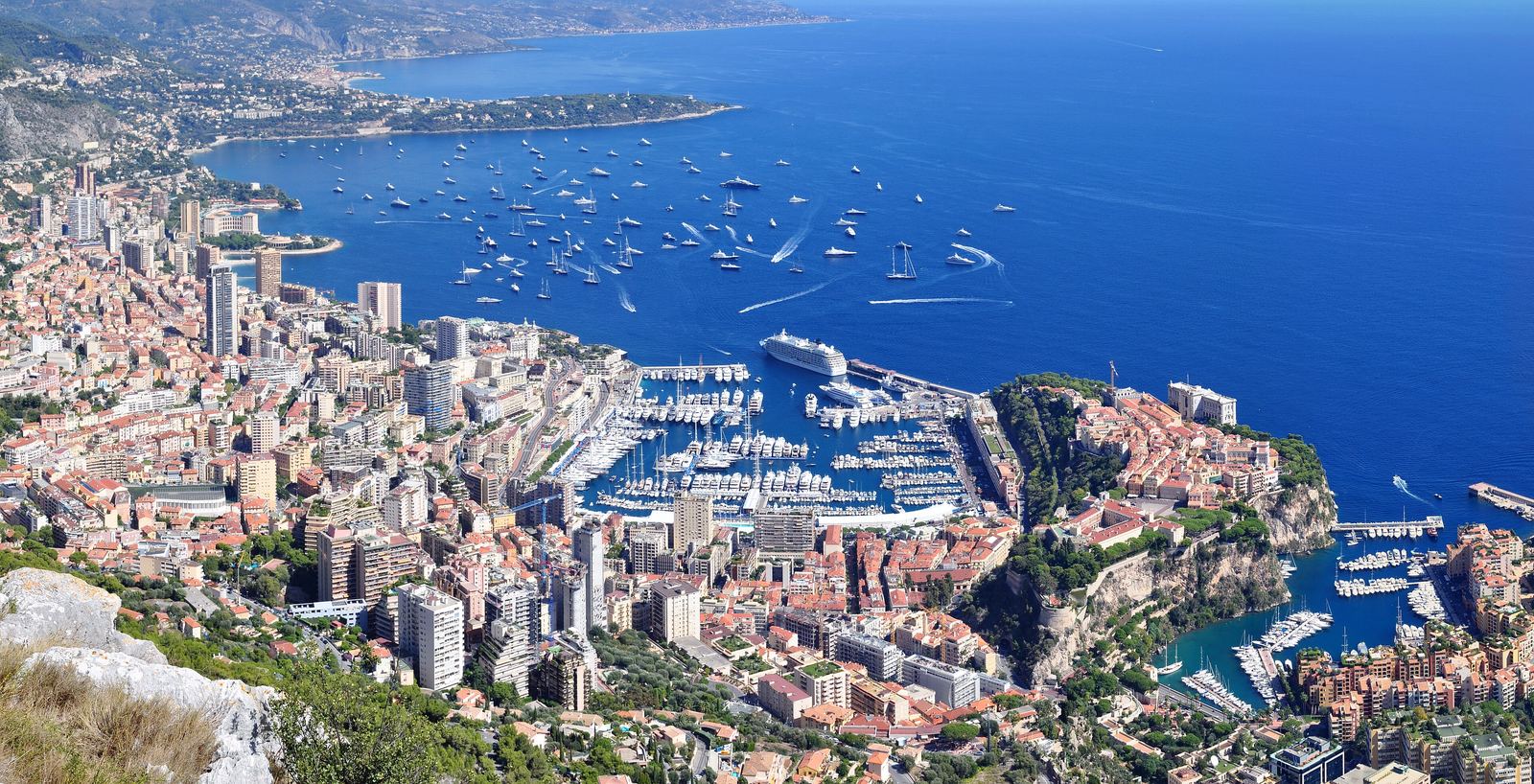
11:00 AM
Monaco-Ville, up on the Rock
The old town sits on a limestone headland 60 m above the sea — medieval lanes, and the whole principality laid out below. The changing of the guard outside the Prince's Palace happens at 11:55 exactly, every day, and it's over in about ten minutes, so don't stroll up at noon. Grace Kelly is buried in the cathedral a few streets away.
~1:00 PM
Oceanographic Museum
Better than it sounds, and dramatically sited — the building drops 85 m straight down the cliff face to the sea. Founded by Prince Albert I, and run for thirty years by Jacques Cousteau. Sharks, a huge coral tank, and a roof terrace with one of the best views in Monaco.
Afternoon
Larvotto, or up to the cactus garden
Two ways to spend a hot afternoon. Larvotto is Monaco's public beach — properly public, free, and a short walk from Monte-Carlo. Or ride the lifts up to the Jardin Exotique, thousands of succulents on a cliff terrace with a cave underneath and the best wide view back over the whole principality.
After 9:00 PM
Inside the Casino de Monte-Carlo
You can pay a few euros just to walk through the Belle Époque rooms — the Salle Europe with its onyx columns and gas chandeliers is worth it even if you never place a bet. Bring ID (18+), and dress for it: no shorts, no beachwear, no flip-flops, and jackets are expected in the private rooms in the evening. Monégasque citizens, for the record, are barred from gambling here.
Passport · smart dress after 8 PM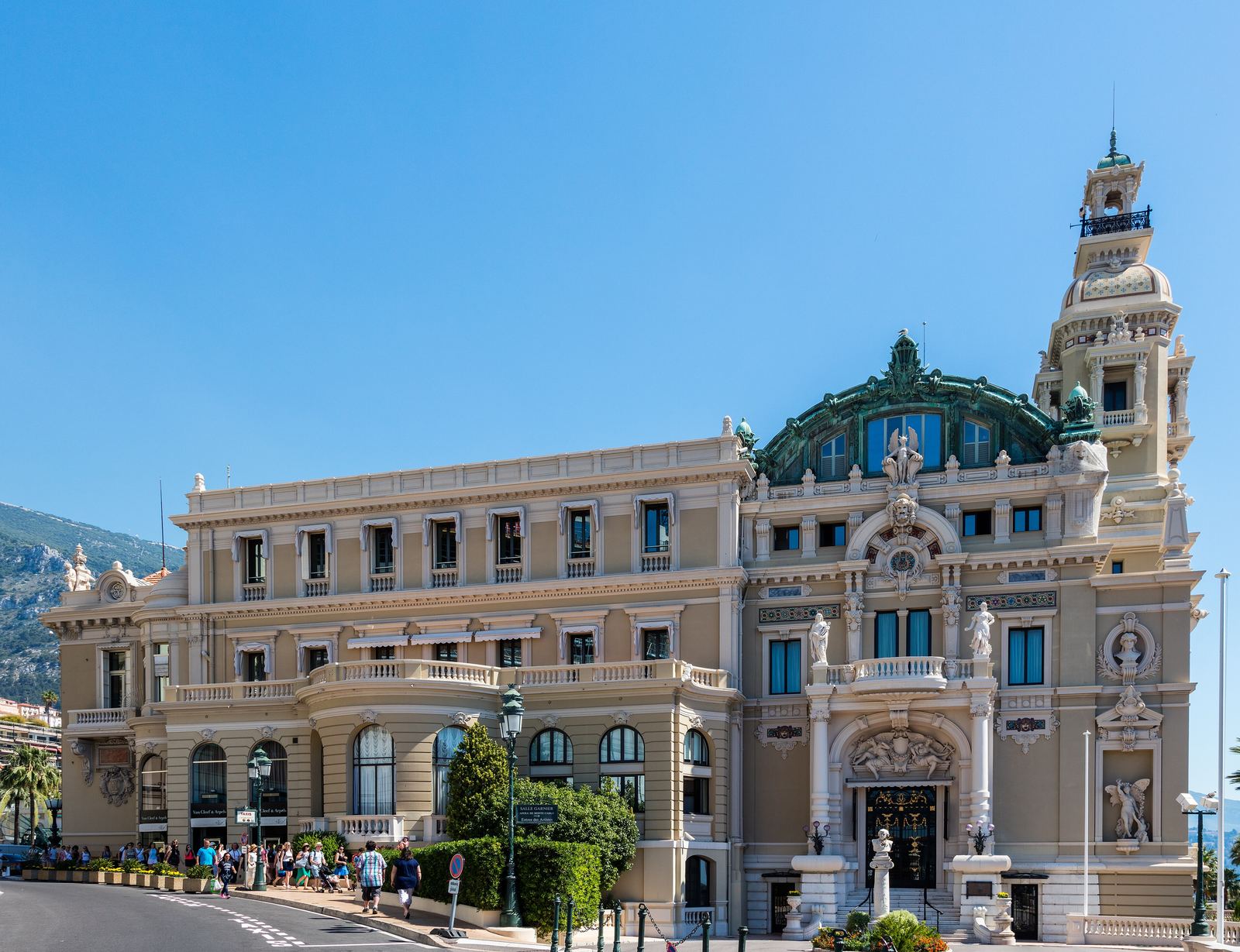
8:00 AM
Drive the Grand Prix circuit
The best free thing in Monaco: the F1 track is just the city's public streets, so you can drive a lap in a rented hatchback. Start at Sainte-Dévote, climb Beau Rivage, right at Casino Square, down through Mirabeau to the Fairmont Hairpin — the slowest corner in Formula One, taken at about 45 km/h — then the tunnel, the harbour chicane, Tabac, and round the swimming pool to Rascasse. Do it early on a weekday morning while the streets are empty.
~9:15 AM
Èze village — and the mistake everyone makes
Twenty minutes back along the corniche and 427 m straight up. First, the trap: there are two Èzes. Èze-sur-Mer is the train station down at sea level; Èze Village is the one you want, 427 m above it on the Moyenne Corniche. Satnav the village, not the commune. No cars go inside the walls, so park at the Général de Gaulle underground lot at the entrance — or, if it's full, the Oppidum lot below, which is about €7 for the day and runs a shuttle up every 15 minutes. Get there by 9:30: the streets are quiet at nine and properly crowded by ten.
Èze Village, not Èze-sur-Mer · park outside the walls~10:00 AM
Up through the lanes to the Jardin Exotique
The village is a single coil of stone lanes and vaulted passages winding up a rock — it's genuinely medieval, and small, so the pleasure is just climbing it slowly. At the very top the Jardin Exotique is planted straight onto the ruins of the castle, cactus and agave terraces with Jean-Philippe Richard's bronze goddesses standing among them. The panorama is the reason to come: Cap Ferrat and Villefranche below you, the Estérel and Cap Camarat near Saint-Tropez some 120 km west, and on a rare clear morning the mountains of Corsica on the horizon. Open 09:00–19:30 in August, around €10, free under 12 — book a slot online, they cap the numbers.
Reserve a garden time slot · jardinexotique-eze.fr~11:30 AM
Free noses, and the path down
Both perfume houses have factories at the village entrance and both give free guided tours, no booking: Fragonard (daily, roughly 09:00–18:00) runs about 25 minutes through the cosmetics laboratory, and Galimard (from 09:30) does the museum and the composition lab. It's a genuinely good half hour and costs nothing. If you'd rather walk: the Chemin de Nietzsche drops from the village to Èze-sur-Mer — Nietzsche worked out part of Zarathustra climbing it — but be honest about it, 45 min–1 h down and up to 1h30 back up, 400 m of stone steps, and you'd be doing it in August heat with the car parked at the top.
Nietzsche path is a 2h round trip — skip it if you want Menton~1:00 PM — or go the other way
West instead: Villefranche & Cap-Ferrat
Today already ends in a choice of direction, and the geography is almost comically even: Menton is 8.5 km east of the hotel, Cap-Ferrat 8.7 km west. You were looking straight down at both of them from the Jardin Exotique two hours ago — Èze is on the western side — so the low road onward is barely five kilometres and costs you nothing in backtracking.
What's over there is the Emily in Paris weekend. Villefranche-sur-Mer is where she steps off the train, and the Chapelle Saint-Pierre on Quai de l'Amiral Courbet — where Camille finds her — is worth the stop on its own merits: Jean Cocteau frescoed the whole interior in 1957, fishermen and angels, in a chapel the size of a room. Three kilometres further round the cape, the Grand-Hôtel du Cap-Ferrat is the hotel they check into and Plage de la Paloma is the terrace where she gets sprayed with Champère.
The joke being that none of it is Saint-Tropez, which is a hundred road kilometres west and where you're actually going on the 31st. Villefranche also earns its keep twice over — the Port de la Darse down the hill is where the Never Say Never Again bike chase ends and where Ronin stages its ambush.
Either / or with Menton — both are ~20 min, opposite directions Cocteau chapel is small and closes for lunch — check before you drive~1:00 PM
Lunch in Menton
The last French town before Italy, and it feels it — ochre and pink houses stacked above the sea, the warmest microclimate in France, lemons growing everywhere. Quieter and more relaxed than anywhere else on this stretch of coast. Eat by the old port, wander the Vieille Ville stairs up to the baroque basilica, and have a lemon granita on the way back down.
Italy is 10 minutes further if you want the stamp The eastern option — pick this or Cap-Ferrat, not bothEvening
Last night in Monaco
Back for sunset at 20:17. Dinner around Port Hercule puts you at eye level with a few hundred million euros of moored yacht, which is its own entertainment. Pack tonight — tomorrow is a driving day and the coast road west is the good one.
Leave by 9:30 AM
Down the coast — pick ONE stop, not both
An hour on the A8, but there's no reason to do it in one go. Doing both of these before a 4pm check-in, however, is wishful: each is a park-walk-eat-repark cycle of two hours minimum, and this is August. Choose:
Nice — the Cours Saleya flower and produce market plus the ochre lanes of Vieux Nice. Best if you want a market and lunch. Note the market winds down early afternoon.
Antibes — the ramparts, the Musée Picasso in the Château Grimaldi where he actually worked in 1946, and Port Vauban, the biggest superyachts in the Mediterranean along the Quai des Milliardaires. Best if you want one proper sight. It's also the closer of the two to Cannes.
The luggage problem. Everything you own is in that car and you'll be parking it in two tourist towns. Côte d'Azur car break-ins are a genuine summer sport. Nothing visible — boot only, packed before you arrive, not in the car park where people can watch you do it.
One stop · bags out of sight before you park~4:00 PM
Check in — Hôtel Martinez
Art Deco, opened 1929, right on La Croisette facing the bay — and now part of the Unbound Collection by Hyatt. Its restaurant, La Palme d'Or, holds one Michelin star under Jean Imbert, and during the Festival this is the hotel the industry actually stays in. It is also, as of season four, the White Lotus Cannes — the production picked it as the flagship hotel of the season, alongside a château above Saint-Tropez you'll be able to see from the water in a few days.
2 nights · Aug 28 – 307:30 PM
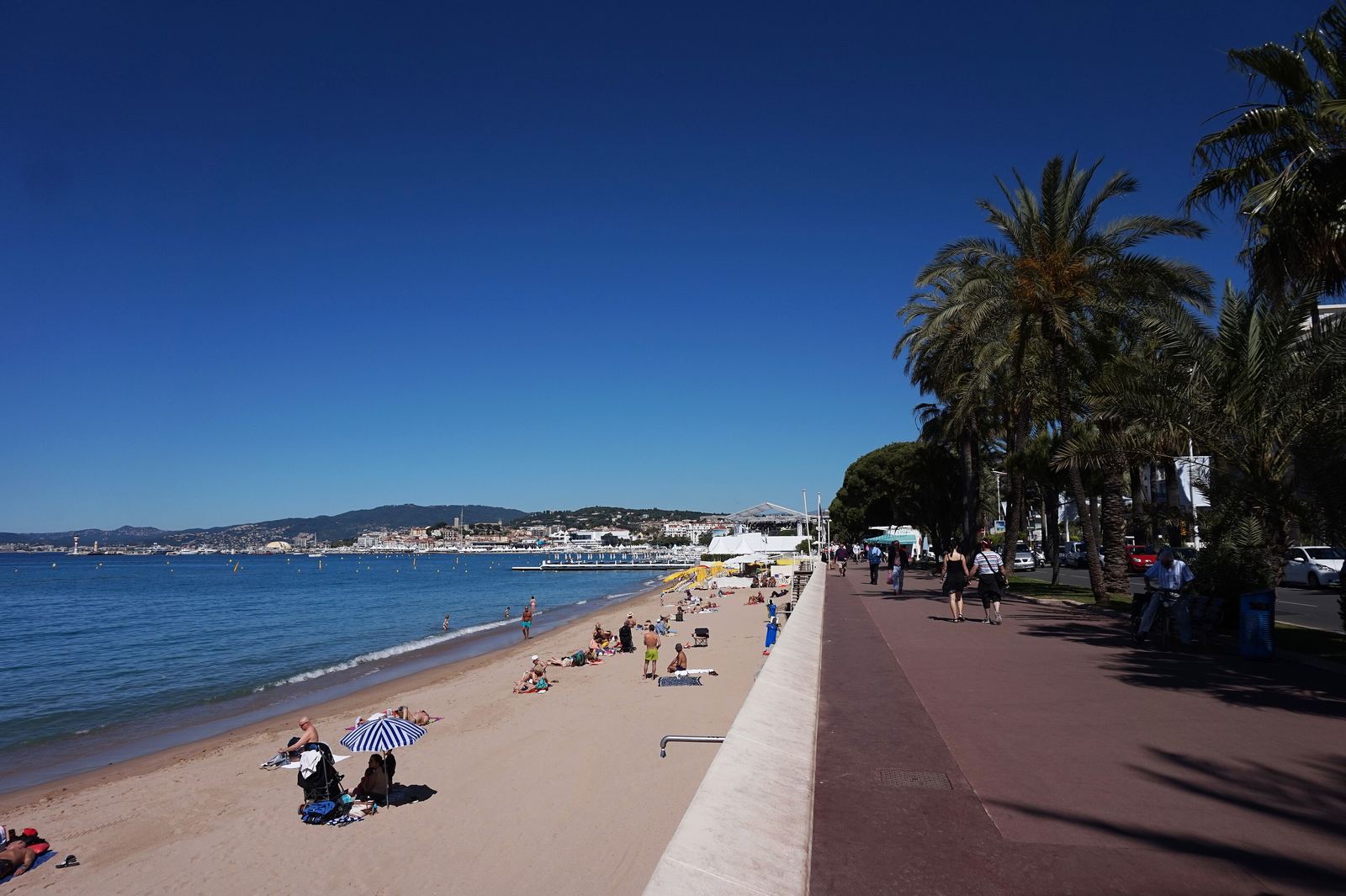
La Croisette at golden hour
Walk the palm-lined seafront from the hotel toward the old port as the light goes. Sunset is 20:17. It's about 2 km end to end, the bay curves the whole way, and the Îles de Lérins sit just offshore going purple. Dinner in the streets behind the Croisette, or up in Le Suquet if you want the view down over the harbour lights.
9:00 AM
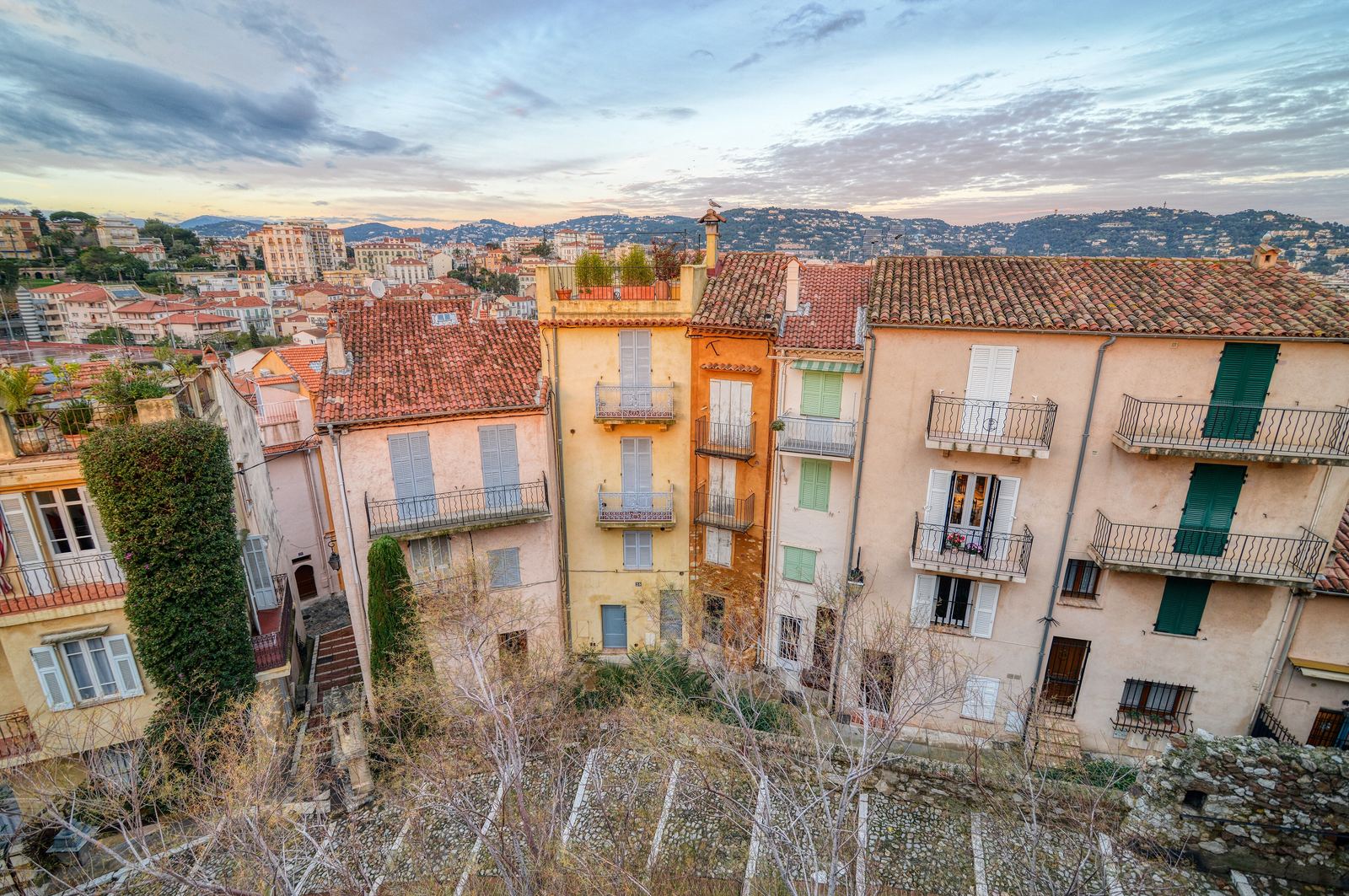
Le Suquet, before it warms up
The old town climbs the hill west of the port in a tangle of stepped lanes and shuttered stone houses. At the top, the church of Notre-Dame d'Espérance and the square watchtower of the Musée de la Castre — climb it for the best view in Cannes, straight down over the terracotta roofs, the harbour masts and the whole sweep of the bay. On the way, the Marché Forville is in full voice on a Saturday morning.
~11:30 AM
The red carpet steps
The Palais des Festivals is a fairly plain concrete box for eleven months of the year, but the famous 24 steps are right there and unguarded, so you can walk up them. Set into the pavement around it is the Allée des Étoiles — handprints pressed by everyone from Depardieu to Scorsese.
Afternoon
Île Sainte-Marguerite
The best escape on this coast and almost nobody on the Croisette bothers. A 15-minute ferry from the old port lands you on a car-free island of eucalyptus and Aleppo pine, with clear swimming coves all round the shore. The fort at the top held the Man in the Iron Mask for eleven years — you can stand in the cell. Take water and something for lunch; there's very little on the island, which is precisely the point.
Ferries run from the Vieux PortOr the other island
Île Saint-Honorat
The second Lérins island, twenty minutes further out and completely different in character. Saint Honoratus landed here in about AD 410 wanting to be a hermit, and within a few years had accidentally founded what became the most influential monastery in the western church — Saint Patrick studied here before going to Ireland. Cistercian monks still live on it, about twenty of them; they farm eight hectares of vines and sell the wine, and the island is theirs rather than the public's, so it's quiet in a way Sainte-Marguerite isn't. The ruined fortified monastery on the south shore, standing straight out of the sea, is the picture everyone takes.
It's a different boat. Saint-Honorat is run by the abbey's own operator and Sainte-Marguerite by another — same quay at the Vieux Port, but two separate tickets, roughly €18–20 return each. Doing both islands in one afternoon is tight; pick one unless you start early.
Separate ferry & ticket from Sainte-Marguerite — check both timetables at the quay Dress is expected to be modest — it's a working monasteryEvening
The one big dinner
If there's a night on this trip to spend properly, it's this one. La Palme d'Or is downstairs in the hotel and holds one Michelin star — book it well ahead and note that August is peak season on the Côte d'Azur. It does open on Saturday evenings, so tonight works. If you'd rather stay casual, the restaurant terraces stacked up the hill in Le Suquet look out over the lit harbour and cost a fraction of it.
Reserve La Palme d'Or in advance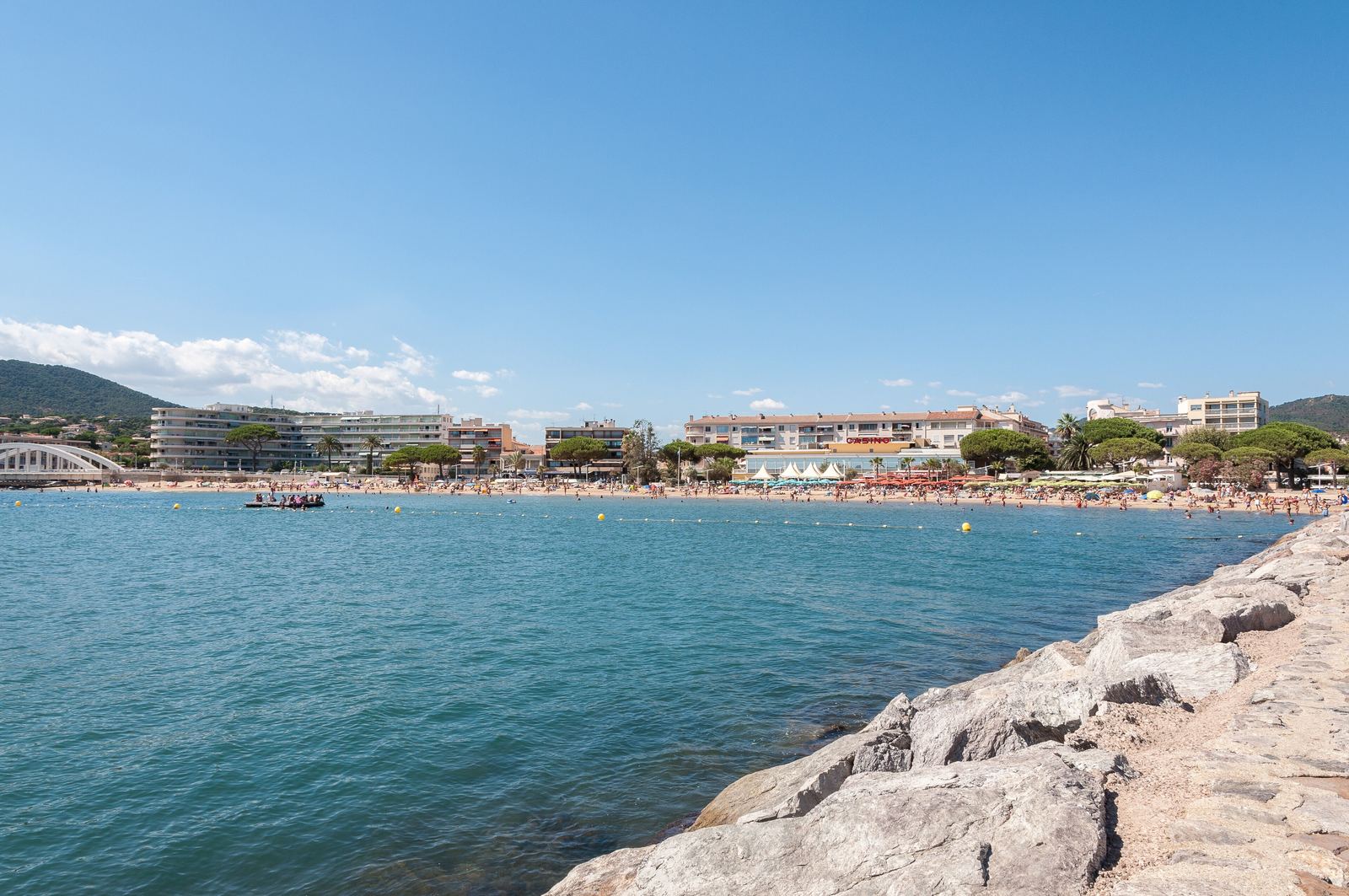
Leave by 10:00 AM
The Corniche d'Or
Only 75 km, but do it the beautiful way. The N98 between Cannes and Saint-Raphaël cuts through the Massif de l'Estérel, where the rock is blood-red volcanic porphyry falling straight into blue water — one of the most spectacular coast roads in France, and empty compared to the motorway. Pull over at the calanques. The A8 inland is faster and there is no reason at all to take it today.
Leave early — August Sunday traffic is realAfternoon
Into Sainte-Maxime
A proper French seaside town rather than a resort — a sandy beach right in front of the centre, a promenade of plane trees, and a small port. It faces due south across the Gulf of Saint-Tropez, which means it gets the sun all day and looks straight across the water at the famous village opposite, without any of the prices or the traffic.
Evening
Nothing much, on purpose
You've been moving for ten days. Swim, walk the promenade, eat somewhere on the front, and watch the lights come up across the bay at Saint-Tropez — sunset is 20:15. Tomorrow's the last full day and it's a good one.
~9:30 AM
Leave the car. Take the ferry.
This is the single best piece of local knowledge on the trip. Saint-Tropez is barely 14 km around the bay, but that road is a legendary August car park, and parking at the other end is worse. Les Bateaux Verts run straight across the gulf from Sainte-Maxime in about 20 minutes, and land you in the old port itself. The fare is €9.20 one way, €16.30 return — buy the return.
Watch the date. The peak timetable ends 28 August, and you travel on the 31st — so you're on the 29 Aug – 26 Sep schedule, which is thinner than the summer one. First boat out 07:50, then roughly every 20 minutes through the day. Coming back it's frequent until about 18:10, after which it goes hourly: 18:40, 19:00, 19:40, 20:20, 21:20, 22:20, and a last boat at 23:20. Photograph the return board when you land.
Last boat 23:20 · evening sailings are hourly, not every 15 minMorning
The old port & La Ponche
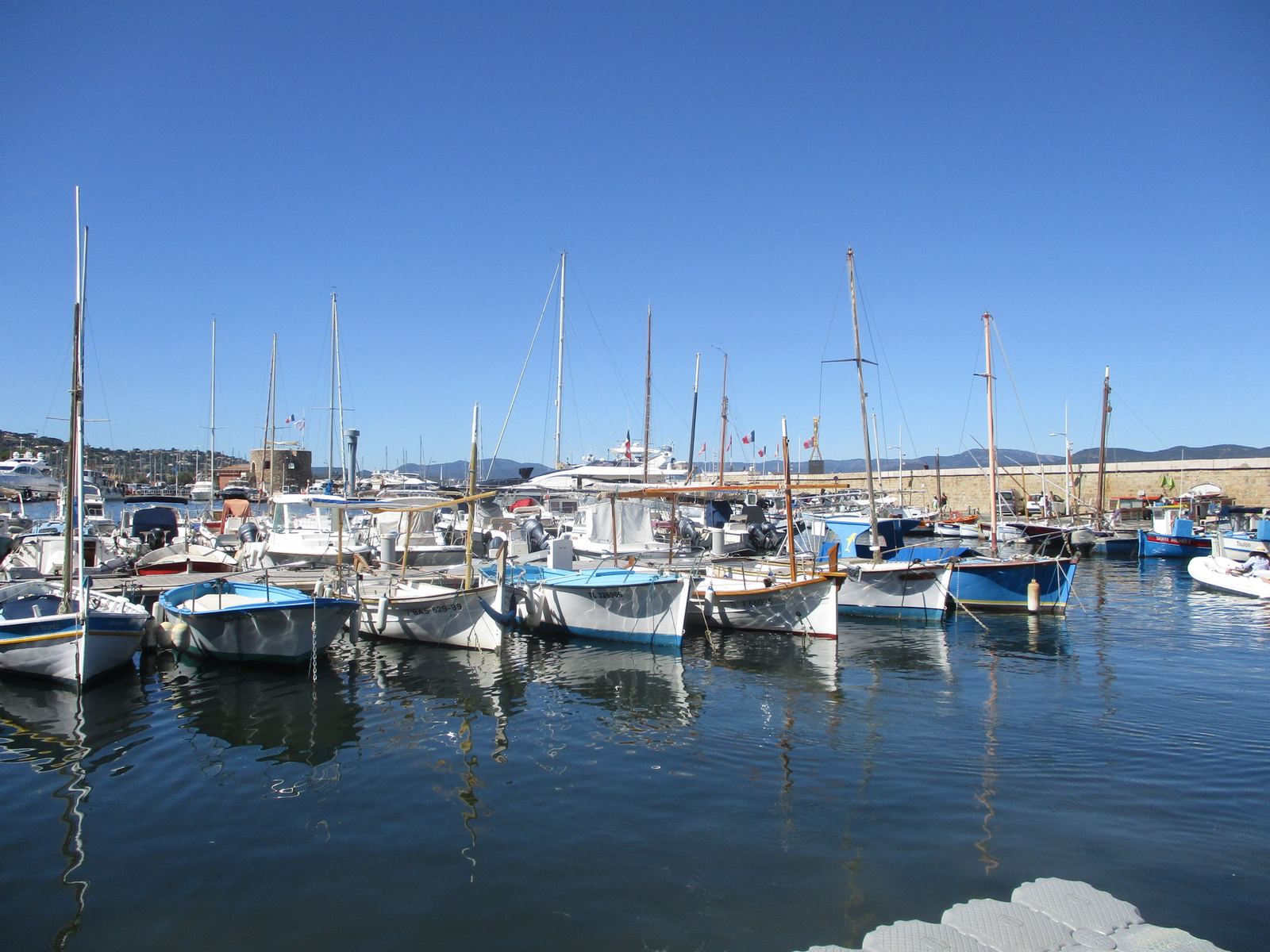
The Vieux Port still has its pointus — the little varnished wooden fishing boats — moored bow-in among the superyachts, which is the whole charm of the place in one image. Behind them, the Musée de l'Annonciade holds a serious collection of Signac, Matisse and Bonnard, who all painted here. Then walk into La Ponche, the old fishermen's quarter — narrow, ochre, quiet — and up to the Citadelle for the view back over the roofs and the whole gulf.
You're walking through two film sets. La Ponche is where Roger Vadim shot most of And God Created Woman in 1956 — the film that turned a quiet fishing village into Saint-Tropez and Brigitte Bardot into Brigitte Bardot. And on Place Blanqui, two minutes from the port, the old gendarmerie station from Le Gendarme de Saint-Tropez is still standing: Louis de Funès made six films in it, the brigade actually worked there until 2003, and it's now the Musée de la Gendarmerie et du Cinéma — €5, open 10:00–19:00 through 31 August, and small enough to do in forty minutes.
Place des Lices market is Tue & Sat — not today Gendarmerie museum €5 · 2 Place Blanqui · confirm the day's hoursAfternoon
Pampelonne, if you want the legend
The beach that made the reputation: 5 km of sand, lined with the clubs — Club 55, Nikki Beach and the rest. Note the gap in the plan: the ferry lands you in the old port and Pampelonne is a further 4–5 km, so it needs a taxi or the local bus on top — about 20 minutes each way, and taxis are scarce and expensive on an August afternoon. Budget the round trip before you commit, or skip it and swim closer to town. A day bed costs real money and wants reserving; the public stretches between the clubs are free and just as good a swim. Look up at the hills behind and you can pick out Château de la Messardière — the other hotel The White Lotus took over for season four.
Not walkable from the boat — taxi/bus each way~7:00 PM
A drink on the port, then the last boat
Sit at Sénéquier on its red triangular chairs — the classic port-side spot since the 1930s — and watch the boats come in. It's also, for what it's worth, one of the few places in Emily in Paris's Saint-Tropez episode that genuinely is Saint-Tropez; the hotel and the beach club were both filmed 100 km east around Cap-Ferrat. The last boat is 23:20, but from about seven they're only hourly, so pick your sailing rather than assuming one turns up. Last dinner of the trip back in Sainte-Maxime, or on the port here if you'd rather end it on the water.
16:05 — and it changes this day for the better
You get the whole last morning
This day was built around a flight nobody had read yet, and the two candidates were a 06:00 easyJet — which would have meant leaving Sainte-Maxime at three in the morning — and a late-morning Aegean. It's neither: it's 16:05, which is the best of the three outcomes and means nothing here needs rushing.
Working back from it: be at Nice by 14:00 to return the car and check in, the drive is 1h30 plus the August tax, so you leave Sainte-Maxime around 11:45. That leaves a genuine last morning on the Riviera — breakfast, a final swim off the beach, pack at leisure, check out at eleven.
Read as 4:05 PM · if the ticket says 04:05 this day inverts completelyUntil ~11:00
One last swim
Sainte-Maxime's town beach faces south across the gulf toward Saint-Tropez and the water is calmest first thing. This is the last Mediterranean swim of the trip and you have time for it — which, on the original version of this page, you did not.
~11:45 → arrive ~14:00
Sainte-Maxime → Nice airport
About 100 km and an hour and a half on the A8 in clean conditions — but this is the first week of September on the Côte d'Azur and the Tuesday after the August exodus, so build in an extra 45 minutes and don't cut it fine. Fill the tank before you get to the airport: rental returns are full-to-full and airport fuel prices are punitive. Take your four-corner photos again at the drop-off, and keep the signed return slip.
Fuel up before the return · keep the paperwork16:05 → about 19:25
Nice → Athens
Around 2h20 non-stop, and you give the hour back — Greece is an hour ahead of France, so a 16:05 departure puts you on the stand in Athens at roughly 19:25. Nice's runway juts into the sea, so the take-off along the coast is a decent last look at the Riviera.
Allow about 45 minutes from wheels-down to being on the metro or in a taxi, then 40–45 minutes into town — so realistically at the Moxy somewhere around 21:00.
~21:00
Moxy Athens City
On Stadiou right by Omonia Square, which is the practical choice for a one-night turnaround — the metro is a few minutes' walk and the airport line is one change away. It's a different Athens from Kolonaki: busier, grittier, more downtown. Psyrri and Monastiraki are a short walk south, and the timing actually suits them — Athens doesn't really start eating until ten, so a 21:45 table on the last night is normal rather than late. One more rooftop with the Acropolis lit up behind it.
1 night · Sep 1Leave the hotel ~3½ hours before the flight
Omonia → the airport
From Omonia take Line 2 (red) one stop to Syntagma, change to Line 3 (blue) and stay on it to the airport — €9–10 a head. Be realistic about the clock: the airport run alone is ~40 minutes, and door-to-terminal with the walk, the change and the wait is 70–90 minutes, not the 45 you might assume. Crucially, only some Line 3 trains go all the way to the airport — the through service is roughly every 36 minutes, not every train and not every half hour, so read the board for the ones marked Airport and don't board hopefully. First one is around 06:30. With heavy bags or a tight flight the flat-rate taxi is €40, door to door, and removes the whole problem.
Airport trains ~every 36 min · budget 70–90 min door to terminalDeparture
Athens → Taipei
Thirteen nights, two seas, six beds and about 200 km of coast road. Fly east and lose a day getting home — you'll land on the 3rd.